
SIFF: EIGHT BRIDGES (James Benning, 2026)

When faced with a filmmaker like James Benning, there’s an understandable, but misguided tendency to frame the minimalist, durational work as a type of cinematic endurance test, a piece of anti-spectacle spectacle discussed almost derisively in the way people talk about “modern art”. I don’t know if listening to a fan will make someone less “bored” with a film like EIGHT BRIDGES, but I always feel compelled to defend the experiential qualities of this type of filmmaking. Yes, this is “pure” cinema, where the choices of framing, sound, image juxtaposition, and yes, time, alters our perception of the mundane, but these are also generous films that grant the space to think, that trust the audience’s ability to make sense of images without sacrificing the basic pleasures of looking at a stunning landscape. For the most part, they’re deeply enjoyable experiences.
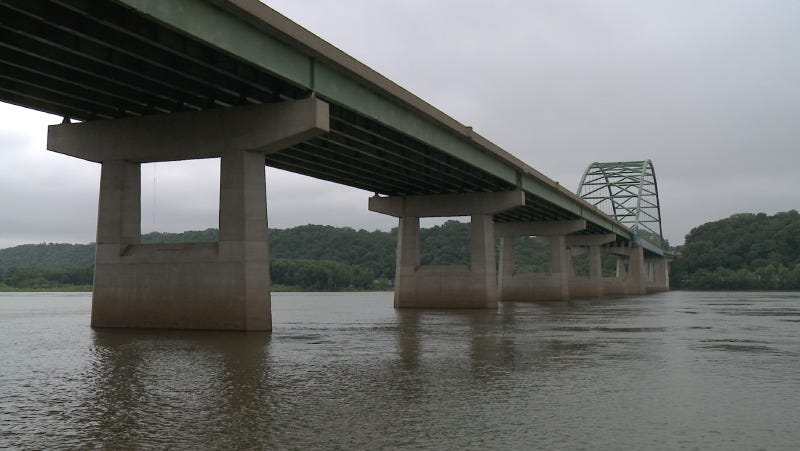
EIGHT BRIDGES is exactly what the title describes - eight ten-minute shots of bridges across the United States shot in 2025. As discussed in my festival preview, this is a loaded concept, one that joins Benning’s numbered landscape films (Ten Skies, Thirteen Lakes) with his studies of American industry (RR, The California Trilogy) while transposing a method whose shot restrictions were medium-dependent on 16mm film to digital. It puts the film in a strange position, where to live up to its predecessors, each of its eight shots would need to feel like a divine blessing. I don’t know if EIGHT BRIDGES meets those unfair criteria (I sort of miss when he still color-graded his films), but it’s nevertheless a dynamic, satisfying watch.

One of EIGHT BRIDGES’ primary concerns is of course the relationship between humanity, its products, and the American landscape. This is the subject of the first shot of the Golden Gate Bridge, where arguably the subject of the frame isn’t the towering red structure, but a tiny lookout on the bottom left where onlookers shuffle in and out, straining to get the perfect shot of the San Francisco Bay. It’s a case where the bridge is an icon that’s inextricable from our understanding of the surrounding landscape, the reason for the area’s notoriety. This sentiment is also reflected in the second bridge, the Rio Grande Gorge, shot parallel to the horizon such that it’s camouflaged against a mountainous terrain.
To EIGHT BRIDGES’ credit, the film doesn’t have an overriding thesis, instead using these 8 examples as an invitation to ponder. A few of the bridges are treated as obstructions between water and sky, or perhaps earth and the heavens. There’s a historical resonance to this framing in the third shot of the Edmund Pettus Bridge, famously the site of Selma’s Bloody Sunday. In the fifth, the top of New York City’s bustling George Washington Bridge extends beyond the frame, a symbol of American capital dominating the landscape. These two images surround the best shot, an alien image of Florida’s Seven Mile Bridge where, with no land in sight, the bridge seems to stretch infinitely.
The George Washington Bridge precedes two shots of relatively abandoned bridges in the Midwest, the second of which, the Hi-Line RR bridge sees zero traffic. These shots remind that EIGHT BRIDGES is also in conversation with 27 Years Later, an existential digital “remake” of One Way Boogie Woogie, Benning’s loving portrait of a fading Midwest Americana. The evocation of 16mm, which once seemed inextricable from Benning’s blue-collar class background, has an obvious connection to these hollowed-out landscapes. These resonances are enhanced by Benning’s constructed soundtrack. EIGHT BRIDGES briefly becomes a horror film during the Hi-Line shot when we hear the sound of a ghostly train, suggesting everything from the offshoring of blue-collar jobs and the violent expansion of the American Empire to death itself lingering in the frame. The serene last shot, which observes a ship pass underneath the Astoria-Megler bridge, puts forth a possible next iteration of Benning’s project.
Eight Bridges plays at SIFF May 13th and 15th.