
Avatar: Fire and Ash (James Cameron, 2025)

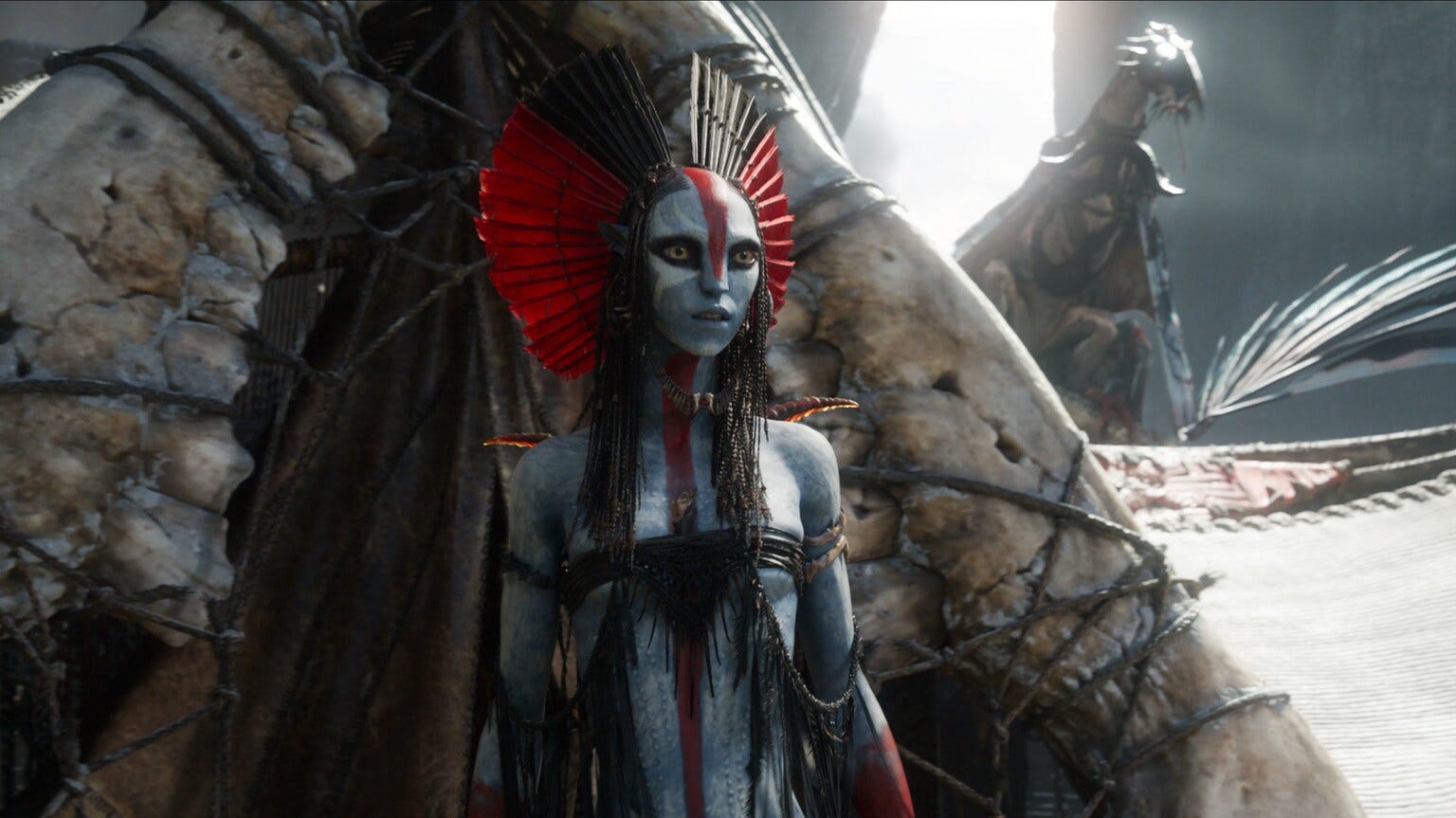
The third entry in James Cameron’s record-setting Avatar franchise is an exciting, if familiar retread of 2022’s The Way of Water. Picking up soon after the previous film’s conclusion, Avatar: Fire and Ash revolves around another conflict between Jake Sully’s makeshift Na’vi family and the humans hungry to exploit their abundant lands. Still residing with the marine Metkayina clan, Jake Sully once again needs to unite the Na’vi against the humans’ latest attempt at hunting Pandora’s Tulkun whales while keeping his family intact. In sticking to familiar locales and building on established character dynamics, Avatar: Fire and Ash is a different beast from its two predecessors, which devoted significant attention towards ethnography, taking great care to turning the novel beauty of Pandora into intoxicating spectacle. That transporting quality was arguably the impetus for the franchise’s branding as a 3D experience, which remains a central focus of the series’ branding. Comparatively lacking in new areas to unlock, Fire and Ash is now mostly transporting as a throwback to a bygone era of Hollywood blockbuster filmmaking of awe-inspiring technical achievement and masterfully orchestrated thrills. The correspondingly regressive qualities of the narrative, with its hackneyed reverence for the nuclear family and noble savage tropes, are now primarily masked propulsive action as the strategically separates the Sully family to push the characters from point A to point B.
That formula makes Fire and Ash compulsively watchable, but retrospectively thin. If the public discourse around Avatar lackluster cultural footprint has a kernel of truth, it’s because Cameron’s characters are primarily vessels for motion-captured kineticism whose flimsy archetypal construction leaves little impression. Now that the franchise has moved beyond a setup phase, that frustration is an increasing impediment. The narrative deficiencies are rather glaring in the entry’s major additions, the Ash people, a Na’vi tribe who rejected the goddess Eywa after a volcanic eruption ravaged their lands. The Ash are led by Varang, a seductive Na’vi witch whose sorcery is rooted in both her atheism and promiscuity. Although Varang and her rivalry with Neytiri initially seems like the most interesting, if criminally under-explored, aspect of Fire and Ash, the Ash’s eventual alliance with the humans turns them into glorified henchmen for the human colonizers. Even that deference to yet another climactic alpha male showdown between Jake Sully and Stephen Lang feels like part of Avatar’s nostalgia. Putting on the 3D glasses and watching Fire and Ash is an escape to a rarified echelon of tentpole spectacle, but the film already feels outdated.
Avatar: Fire and Ash is distributed by 20th Century Studios and is in theaters December 19th
Superbly written review. You can’t talk about the Avatar movies without addressing the sheer technical marvel it is. I’m glad you mentioned that it was held back by its one-dimensional narrative.